
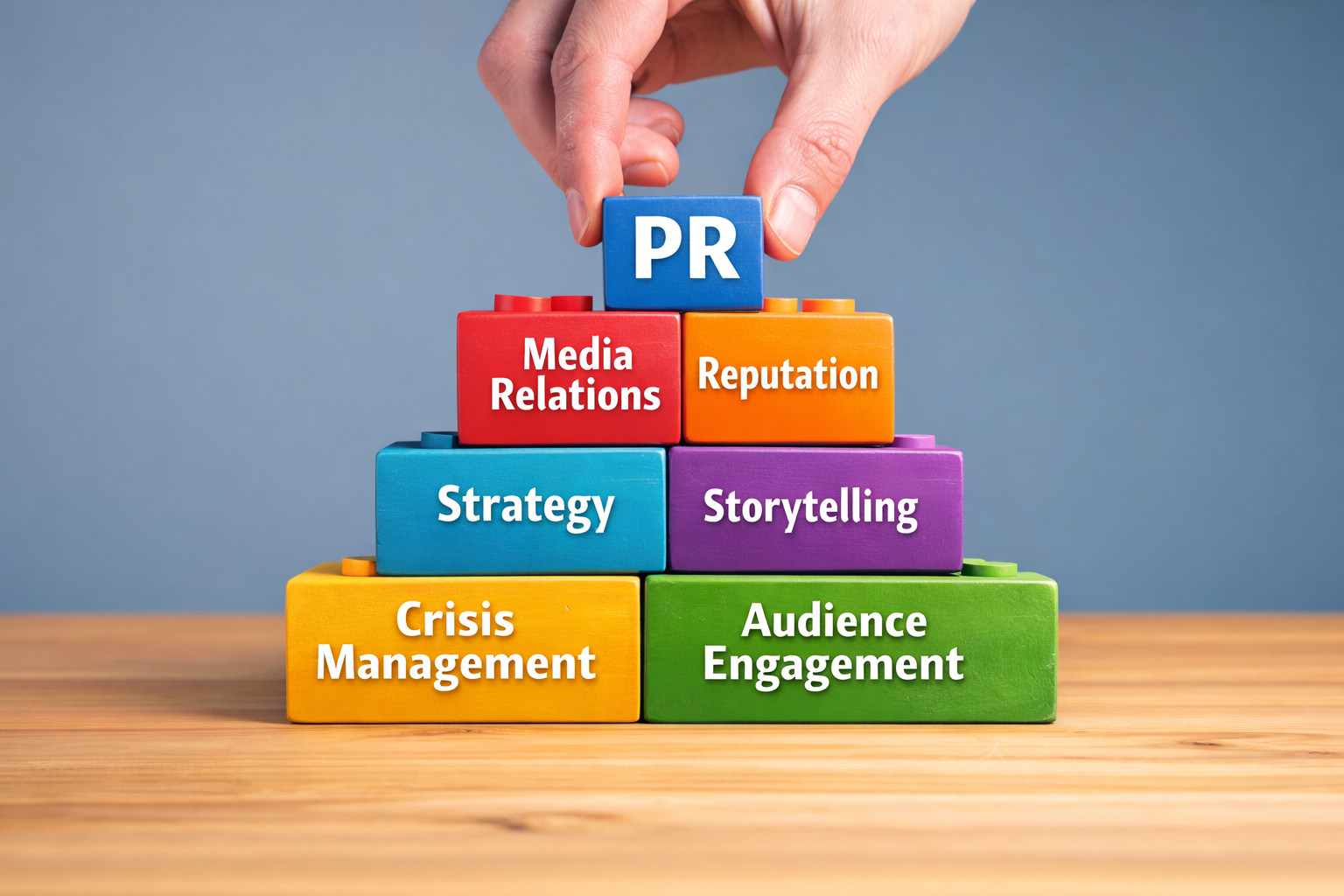
PR has always sat at the intersection of perception, trust and time. While platforms and tools keep changing, its core role remains the same: shaping how a brand is understood and judged once the moment passes.
What has shifted is the environment in which it operates. Shared reality has become fragile: short clips overpower context, repetition turns assumption into proof, and narratives harden quickly in public view. In this terrain, PR leans less on clever messaging and more on verifiable presence: consistent language, stable spokespersons, and a clear official record. That’s why in 2026, the fundamentals will still hold, but the scrutiny will have become constant.
The cost of ignoring fundamentals is rising
Despite how much the media environment has shifted, some realities of PR remain stubbornly unchanged: relationships with journalists will still matter, but they never guarantee coverage, because relevance, timing, and editorial context ultimately decide outcomes. This is also why shortcut-driven PR models and “guaranteed placements” continue to be risky.
BYJU’S prolonged unravelling is a clear example of how accumulated brand equity can erode when governance issues, delayed course-correction, and inconsistent communication collide, turning what begins as a financial or operational problem into a reputational one because the narrative was never reinforced steadily over time.
In 2026, more brands will start to acknowledge that the long game in PR is an inevitable protective layer for brands.
Discovery is being rewritten
One of the biggest shifts affecting PR is happening outside the industry itself. AI-driven discovery now pulls from everywhere: press coverage, trade stories, newsletters, podcasts, community conversations, and video rather than privileging a single headline. As a result, belief often takes shape in smaller, specialist circles before it ever reaches the mainstream.
This is why PR is moving from press-first to reputation-first thinking. A prominent mention can still create a moment, but moments don’t compound. What lasts is a steady, credible presence across formats over time. When PR doesn’t accumulate, it doesn’t travel.
Media literacy is not brand responsibility
One uncomfortable reality has become hard to ignore: polish is still often mistaken for truth. Well-produced misinformation travels faster than careful clarification, and audiences rarely wait for the whole picture to emerge. The Eggoz “antibiotic eggs” scare showed how an influencer-led claim can reshape perception almost overnight, pushing the brand into defensive conversations around quality and safety.
The ‘Sanchar Saathi’ backlash followed a similar pattern, where a policy misstep on privacy was amplified by weak initial communication, allowing suspicion to harden before context could settle. In both cases, real issues were compounded by the absence of a trusted reference point. That is why PR in 2026 leans less on persuasive messaging and more on verifiable presence with consistent statements, accessible records, and a visible trail that can steady the story before it sets.
Official records are re-emerging as trust infrastructure
There’s a quiet irony in how some of the oldest PR tools are becoming useful again. Press releases, long dismissed as outdated, do what social posts can’t: they create an official record that is structured, referenceable, and difficult to distort without it being obvious.
They also travel well through today’s infrastructure. Wire services still matter, indexing still matters, and clean statements increasingly feed the systems that summarise and surface information.
Thought leadership moves in the same direction. Done well, it maintains narrative continuity between announcements and keeps a brand present without forcing noise.
Influence is fragmenting
Over the past year, it has become increasingly clear that influence no longer begins with mainstream media. It often takes shape earlier, on smaller platforms: Substack newsletters, niche podcasts, YouTube creators, and community-led shows before filtering upward into wider coverage.
The Raj Shamani - Vijay Mallya podcast made this shift hard to ignore. What was positioned as a long-form conversation quickly became a national debate about image laundering, accountability, and the role that creator platforms now play in reframing controversial figures. Crucially, the scrutiny didn’t stop at the guest; it extended to the medium itself.
In 2026, multiple niche placements can outperform a single headline, but only when the platforms carrying them are trusted, because influence now moves sideways before it moves up.
AI is strengthening the case for human judgment
AI’s biggest impact on lies is how quickly it turns small issues into full-blown reputation risks. Synthetic content has moved out of theory and into everyday reality. Over the past year, brands have repeatedly found themselves responding not to what they actually did, but to audio clips, videos, or visuals that travelled far enough to be believed.
The IndiGo meltdown in late 2025 showed how quickly this can escalate: an internal rostering failure turned into a public trust and governance issue, complete with ministerial intervention and penalties. In 2026, a holding statement and a reactive playbook won’t be enough. Once a narrative fits the public mood, facts tend to arrive late and often struggle to catch up.
In 2026, the real story is simple: trust has become the product. And trust is built in slow, unglamorous ways by showing up consistently, by being verifiable, by keeping the narrative steady.
The market will tempt brands with shortcuts, with the “guaranteed visibility” pitch in newer avatars. But it’s still the same offer: rented attention that disappears the moment the spending stops. Visibility without credibility evaporates. And when scrutiny arrives, engineered tactics often make it easier to distrust a brand.
When PR is treated as something structural rather than episodic, it stops being an activity and starts becoming something far more valuable - a reputation the brand can actually rely on.

-Michelle Pereira, co-founder and director, ElleQuinn Communications