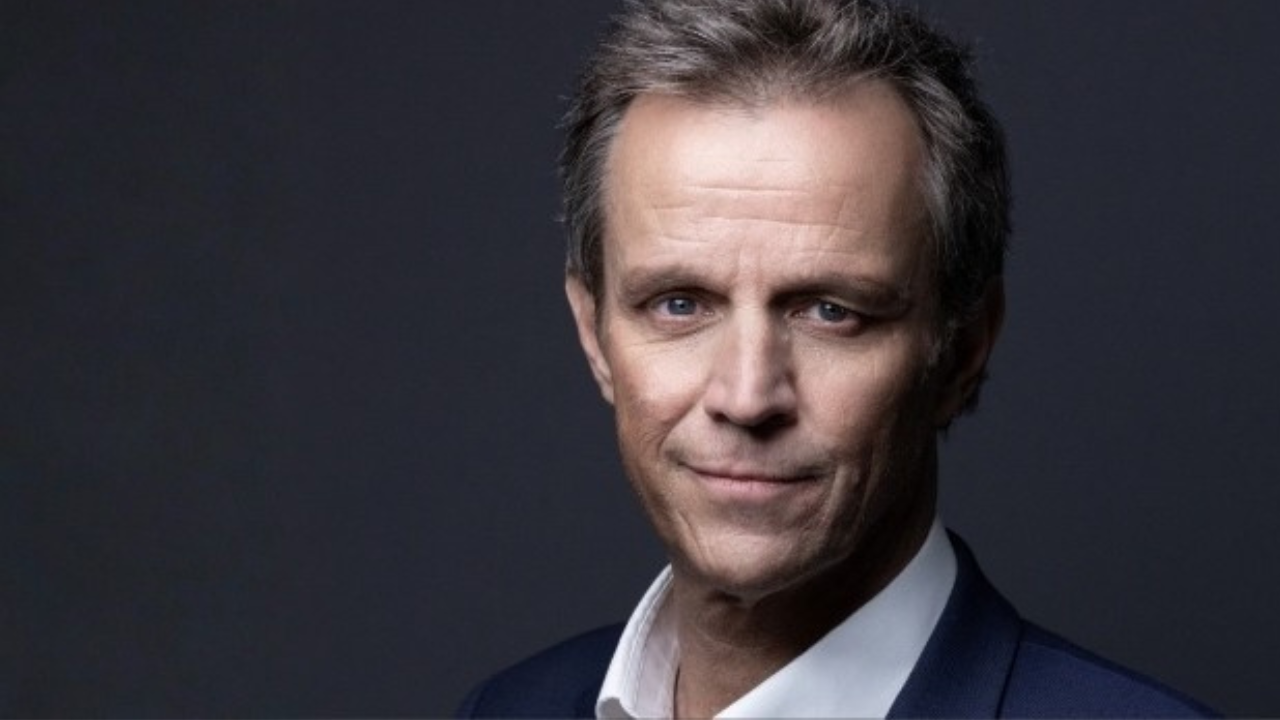
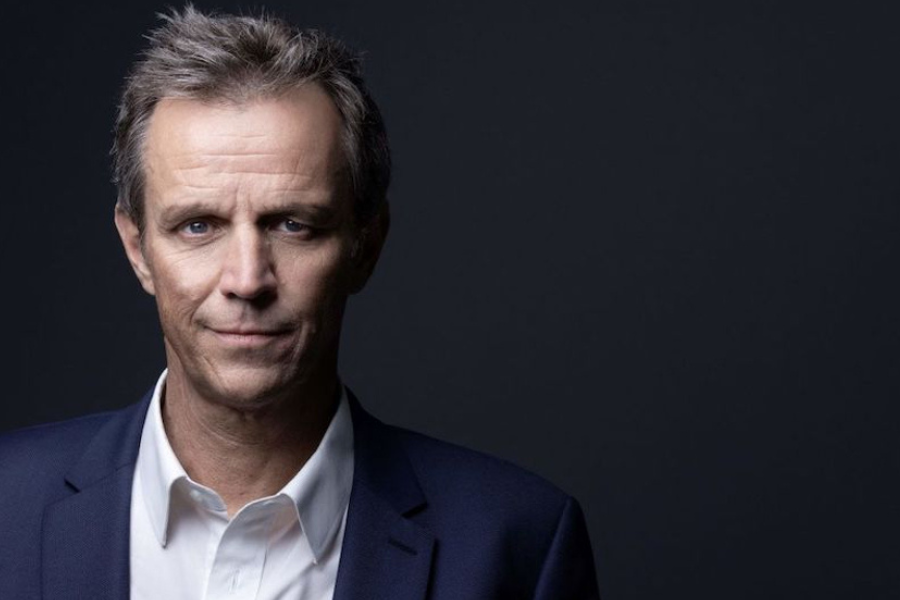
Arthur Sadoun has taken a swipe at a shareholder proxy advisory group which opposed his recent move to become chairman and chief executive in charge of a single, unitary board at Publicis Groupe.
The proxy adviser, ISS, which he did not name, “doesn’t understand that we are in a people business” and such “dogma” could have prevented Publicis from doing previous deals such as buying Sapient and Epsilon, Sadoun told Campaign.
He still won 78% approval for the change in his board role in a shareholder vote in May. Some advisory groups recommend companies split the roles of chair and CEO for corporate governance reasons.
Sadoun was speaking at Publicis Groupe’s Q2 results where he upgraded its annual growth forecast to between 5% and 6%. The 107,000-strong French agency group has been the best performer of the “big six” groups since the pandemic and again beat expectations as organic revenues grew 5.6% in the second quarter, which was “against all analysts’ odds”, Sadoun said, adapting the lyrics of a Phil Collins’ song.
In his interview with Campaign, Sadoun also discussed the impact of this year of elections on the business, how Publicis staff can expect a “very high” bonus pool, and why Saatchi & Saatchi in the UK has had three CEOs in four years.
Campaign: How was Q2 and do you see any changes in how the rest of the year is unfolding?
What didn’t change in Q2 is our ability to outperform the industry once again and gain market share. This quarter we delivered organic growth of 5.6%, above expectations and 400 basis points on average ahead of our peers [based on previous forecasts].
Every region performed well, with double-digit growth in our UK creative and media operations [but the UK as a whole was “broadly stable”]. Publicis Sapient UK was up against a very tough comparable and continued to see the impact of a wait-and-see attitude taken by clients to business transformation projects.
What did change, against all analysts’ odds, is our guidance for the rest of the year. The good news is it changed for the better, despite strong macroeconomic headwinds. We are now planning to grow between 5% and 6% on a full-year basis.
Our new business dynamic, leadership in personalisation at scale, and our unique ability to partner our clients in their AI-led business transformation, make us confident in delivering this upgrade.
France recently had snap parliamentary elections that led to no clear result. Your home market is only a relatively small part of Publicis' overall revenue mix, but you talked about its importance and double-digit growth in 2023 at the shareholder meeting in May. How much does the political uncertainty affect your company and the French market?
Although France is only 6% of our revenue, it has a unique place at the heart of our company, and our strategy. The macroeconomic context in France has been complicated for some time now, so I don’t think the political uncertainty will have much of an additional impact.
As you may have read, France is still looking for a leader in its parliament. We don’t have this problem at Publicis, as we have an incredible president in France in Agathe Bousquet. With her leadership team she has been navigating the business landscape incredibly well in difficult times with, as you say, double-digit growth in 2023 and 7% on top of that in first half of the year.
This is a year of elections globally, most notably in the US, your biggest market. Is it having any impact on client behaviour–for example, decisions being postponed?
Whether it is because of political uncertainties, ongoing conflicts, high interest rates, or stubborn inflation, it is clear that many clients have adopted a wait-and-see attitude when it comes to investing in their business transformation.
On this front we are seeing what we call the AI paradox: 98% of CEOs agree their organisations would benefit from implementing AI, but for the moment macroeconomic uncertainties prevents many of them from committing the capital this transformation requires.
This makes our continued outperformance even more remarkable. Against a challenging global context, the strength of our model means we are clearly benefitting versus our peers from the choices our clients are making in their partners, as they look to maximise their investment in marketing transformation. A good example of that is our double-digit growth with tech clients for the second quarter in a row.
Publicis Conseil in Paris recently won agency of the year at Cannes Lions for the first time. We understand the symbolic importance because Publicis Conseil was the founding agency of the Groupe in 1926. But were there other reasons why this award mattered beyond the historical connection? How much is it about putting the French ad market on the global map?
This award matters way beyond historical connections. What makes me so proud about it is not so much the where, but the how. Publicis Conseil has been recognised as the best agency in the world thanks to big campaigns, with material investment behind them, for longstanding clients - some of them decades-old relationships. It’s not about putting the French ad market on the global map, though I’m glad it has. It’s not even about celebrating a 98-year-old agency – we will wait for the centenary for that.
It’s about recognizing that Marco Venturelli [chef creative officer], Agathe Bousquet and their team have masterfully delivered what I believe makes our business beautiful: big ideas that are changing the future of many of our most iconic clients.
You told us a year ago that you gave staff an average salary increase of 4% in 2023. What can you tell us about salary increases in 2024? To what extent are you using your stronger revenue and business performance versus your rivals to compete for talent on pay or to improve margin?
We've always said our people are our first priority. We have been consistently putting our money where our mouth is when it comes to recognising and rewarding them.
Not only have average salaries across the Groupe continued to increase by more than 4% in the first six months of the year, but we have also committed to maintaining our industry-high bonus envelope for 2024.
We are leveraging our growth to make sure that our people can progress. Our remuneration policy has definitely become a competitive advantage, but the main reason why we are currently retaining and attracting the best talent is the journey we are on to profoundly transform our industry.
We still have the best financial KPIs, including a very high bonus pool on one side and the investment we are doing on AI on the other. So we are maintaining the margin [which is forecast to be 18% for the full year] while absorbing all of the costs.
When you are only halfway through the year, what can you actually say about the bonus pool [after paying €540 million / $587.9 million for the previous financial year]?
We are provisioning the same amount of bonus pool [on a percentage basis] as last year. We took the share of that forward [at the end of H1] to the end of the year [when bonuses are paid] because we believe we are going to out-perform again and our people who drive that need to be rewarded for that in a very generous way.
You became CEO and chairman of a new, unitary board following shareholder approval in May. What are the benefits of having you do both jobs for Publicis Groupe? And what do you say to those shareholders (about 22%) who voted against the changes and may have concerns about corporate governance?
I’d actually like to thank once again the 78% of shareholders who defied the dogma of a proxy organisation that doesn’t understand that we are in a people business. Their votes mean that with Maurice [Lévy, the emeritus chairman] we are able to continue the duo we have formed at the head of the Groupe for the past seven years.
It was also a reminder that we shouldn’t mistake proxy guidelines for good corporate strategy. If we had given shareholders a choice between investing in data and technology by acquiring a Sapient or an Epsilon, versus doing a share buyback, 80% of them would have probably voted for the latter. Meaning that today we wouldn’t be the most valuable company in our industry.
Quite a lot of advertising people were unhappy that you created a video calling on the industry to "take the BS out of AI" because it featured some executives at rival companies and several of them expressed their displeasure to Publicis. Any regrets? And was this double standards on your part when Publicis has been telling clients and staff about the importance of AI and your own Core AI proposition?
As we saw when we launched [internal platform] Marcel seven years ago, criticism from our competitors is normally a good sign that we are making the right moves to lead the change in our industry.
It is precisely because AI is the biggest opportunity and biggest threat for all of us that, as a market leader, we wanted to call out the entire industry, starting with ourselves, to cut the BS from AI.
That promise is actually what is at the heart of our CoreAI. In more than 30 closed-door sessions in Cannes with our clients, we clearly set out how it allows us to make AI real, with the best proprietary data; ready for one-to-one marketing, and relevant for their specific business challenges by designing for outcomes not output.
What is happening at Saatchi & Saatchi in the UK? It came top of the creative agency rankings for Nielsen billings in the Campaign School Reports in April yet it has now had three CEOs in four years. With hindsight, was it a mistake to recruit outsiders on the last two occasions?
Saatchi & Saatchi in the UK has had an incredible run over the past few years, with great new business wins like John Lewis and Waitrose, and industry recognition from Campaign, Creative Circle, British Arrows and D&AD, to name just a few. That’s been made possible thanks to the incredible talent of our teams at Saatchi & Saatchi, and the outstanding leadership of Charlie Rudd across our UK creative agencies.
When it comes to CEOs, we know that in this industry you can’t win all the time, particularly on talent. Looking at past Saatchi & Saatchi CEOs like Magnus Djaba, who today has a key global role at the Groupe, and Sam Hawkey who is already back in the fold, I think we can take a “glass well over half-full” view on this point.
The Olympic Games open in Paris soon. How much is Publicis Groupe involved? Do you expect to get any positive uplift from the Games? And what are you looking forward to attending or watching?
We’re looking forward to hosting our clients during the Games. Our offices are becoming their offices for the whole summer. We have created custom connected bracelets for them, which allow seamless access to our headquarters and facilities on the Champs-Elysées.
We will also put our rooftop terrace at their disposal, which has the best views in the city. You can have a drink in front of the Arc de Triomphe, spot the Eiffel Tower, and wave at Yannick Bolloré [chief executive of Havas] on his [nearby] rooftop terrace at the same time. What more could you want?