Vinita Bhatia
Nov 14, 2025

Why MMA’s Moneka Khurana feels it’s time to retire the CMO title

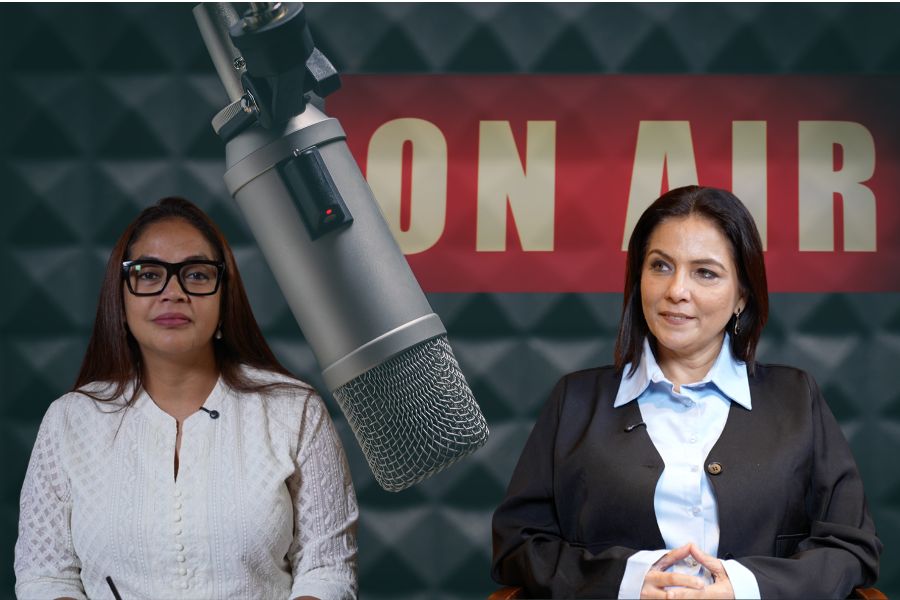
At MMA Smarties Unplugged India, her conversation with Campaign turned from creativity to capability — and why marketing’s traditional role may no longer fit today’s business realities.

When Moneka Khurana says it’s time for the Chief Marketing Officer title to retire, she isn’t courting controversy. She’s calling time on a mindset.

“It is time to adopt the new way of marketing,” said Khurana, country head and board member, MMA Global India. “A marketer is essentially more of a chief business officer or a chief revenue officer, where they have to explore all possible ways for marketing to drive higher performance through hyperlocal marketing, personalisation and nuanced campaigns, always with a purpose in mind.”

Her argument isn’t about semantics; it’s about evolution. Marketing, she explained, is no longer confined to brand storytelling or communication. It now sits at the intersection of data, revenue, and digital infrastructure. “Boards recognise that it’s time,” she added. “Marketers must embrace this shift and prepare for it, rather than experience job churn or reconsider the profession.”

Purpose with precision

At the MMA Smarties Unplugged India 2025, where brands and agencies came together to decode effectiveness, Khurana’s observation reflected a broader truth: marketing is changing faster than its job descriptions. The event’s shortlist of over 200 campaigns, drawn from across industries, offered a snapshot of that change. This is a shift towards purposeful storytelling, AI-powered workflows, and sharper cultural intelligence.

“The shifts we saw while looking at this year’s work is that storytelling has become more powerful and also more purposeful,” said Khurana. “Brands are making a conscious effort to stand up for their values through their stories.” This wasn’t about virtue signalling or surface-level activism. She pointed out that the jury evaluated whether a campaign was a tactical one-off or a long-term commitment. “Many pieces of work showed consistency in driving social impact—be it Lay’s or Dove—where they made deep effort to drive purposeful communication and what they actually stand for.”

Equally striking was how brands are fusing creativity with capability. “There was a deep effort to integrate AI seamlessly in ways to enhance business outcomes, drive ROIs or hyper-personalise for their audience,” she said. “We witnessed a lot more usage of AI.”

Regional storytelling, too, emerged as a strategic pivot. “We saw a lot more regional marketing done smartly by using the right kind of micro influencers, leveraging cultural nuances, playing up festivals effectively, and ensuring that the brand is integrated organically into it.” The result? Campaigns that felt locally grounded but globally sharp.

The long road to AI maturity

If AI has been the buzzword of the past two years, MMA’s role has been to separate experimentation from execution. “Marketers are beginning to use AI effectively, but a lot of ground needs to be covered,” Khurana said.

MMA has been tracking AI maturity across marketing functions and sees a broad spectrum. This spans from beginners exploring basic use cases to advanced practitioners leveraging predictive models and proprietary LLMs.

“At this point, it’s in early stages,” she explained. “Some are at level one or two, just about exploring use cases. Others, at level four or five, have been able to take AI to a level where it can be used for better predicting business outcomes.”

For now, the most common use cases remain tactical, improving marketing efficiency, campaign management, and media planning. But the future, Khurana noted, lies in predictive analytics and proprietary intelligence. “What’s not happening enough is leveraging AI to get deeper insights or build their own LLMs fed with their understanding of customers.”

That’s where agentic AI enters the picture. “While ChatGPT is still there, everyone talks agentic AI today,” she said. “It’s gone much deeper, but it’s still far away, because it takes time to build robust agentic AI models and skill the workforce to use it.”

Mindset, not just technology, remains the bottleneck. “It cannot happen if people aren’t willing to change. You have to be open to unlearning, and then you will grow.”

Quick commerce becomes culture

One of the biggest shifts in consumer behaviour, according to Khurana, is the normalisation of speed. “Speed is no more in the space of convenience; it’s just culture and a new consumer habit,” she said. Quick commerce has moved from being an urban indulgence to an infrastructural habit, one that shapes everything from festive shopping to brand engagement.

“It’s considered to be 10% of the e-commerce retail market, and is predicted to become 20% in the coming year,” Khurana noted. “It will be around a $40 billion industry by 2030.” The scale is being driven by India’s population density and logistical infrastructure, which make the model economically viable.

Quick commerce’s evolution also dovetails with the rise of retail media. This is another trend MMA has been analysing closely.

“The beauty about retail media is that you are always exposed to intent users at all times, and have access to rich shopper data, which helps in marketing investments and campaign efficiency,” Khurana said. A recent MMA study revealed that brands are allocating over 20% of their marketing budgets to retail media, with quick commerce being integral to that spend.

The flywheel effect

For direct-to-consumer brands, this convergence of data, distribution, and storytelling offers both opportunity and risk. “You cannot just jump into it for the moment, flirt with it and then move out, because you will bleed if you do that,” Khurana warned. “If you really build for it as a strategy, it has the power to deliver a flywheel effect.”

She describes this as the “quick commerce flywheel”, a model where consistent investment, strategy, and milestones eventually deliver compounding growth. “Start gradually with a sound strategy, have milestones, and eventually you will see a flip and realise that you’ve made it to a level where you can see the flywheel effect.”

Moneka Khurana (extreme left) with Ogilvy India, which was awarded Creative Agency of the Year at MMA Smarties Unplugged India 2025.

This philosophy of long-term thinking is something she believes D2C brands exemplify. “One reason why D2C brands have been very successful is because of their agility,” she said. “They’re creating their own playbook as they move forward.”

Their advantage lies in focus. “They are very clear that their product is the hero. The more they can disrupt the product proposition and innovate, the more they can grow exponentially with limited resources.”

But sustainability, she warned, depends on reciprocity of learning. “A young brand can always borrow some best practices from legacy brands, and global brands can adapt the best practices that have delivered quick growth for young brands. That’s how insurgents and incumbents exchange learnings and make it work.”

From efficiency to excellence

For all the talk of technology, Khurana insists the definition of marketing excellence hasn’t changed. “It has always been about driving business impact,” she said. “What changes is the way you can better power yourself to drive impact, and the speed at which you can do it.”

Earlier, a traditional market research study might take weeks. “Now, you can digitise this process fully and get the same outcome in one-tenth of the time,” she said. “So, let’s leverage speed to our advantage.”

Marketers today are operating in what she calls the “best time to drive marketing excellence”. This is with access to best-in-class tools, rich data, and a global showcase of case studies through platforms like MMA. “Marketers can take inspiration from APAC, LATAM or EMEA, while learning rapidly to see how to apply it to their business.”

India’s readiness for CAP framework

One of MMA’s most ambitious global frameworks, the Consortium for AI Personalisation (CAP), is now being tested in India. “CAP allows marketers to personalise at scale and in real time through a proprietary framework we built,” Khurana explained. “It has proven to deliver ROIs that are 200% or even higher, depending on the KPI you benchmark it against.”

She revealed that a few Indian board members are already evaluating it, and proof-of-concept studies are expected soon. CAP’s introduction, she said, marks India’s readiness to move from automation to intelligence. “We’ve had this framework in the US for a few years but started evangelising it in India only recently, because the market is now ready.”

The framework sits alongside MMA’s push into new frontiers such as micro dramas—a form of bite-sized storytelling tailored for India’s “scroll generation.” “We are trying to figure out how to evangelise that as power content,” she said. “It’s now culture, which will help build a lot of short format stories.”

Preparing for speed and scale

For Khurana, the thread connecting all these shifts, be it AI, retail media, regionalisation, quick commerce, isn’t technology; it’s transformation. “What is important is to prepare for speed and scale,” she said. “Not be left behind in the race by continuing to follow the traditional marketing path.”

That is where her call to retire the CMO title gains meaning. The marketer’s role, she believes, has already expanded far beyond its historical boundaries. “They should have strong strategies in place with a vision to scale the brand to a path where it delivers high performance,” she said. “That’s when their marketing will be successful.”

As marketers face the tension between creativity and computation, Khurana’s perspective lands as both a challenge and a cue: in an era when marketing is inseparable from business, titles may no longer tell the full story.

Or as she puts it, “Marketers must evolve into chief business officers—not by designation, but by design.”

Source:
Campaign India

Related Articles

Just Published

2 hours ago

The multiverse of men in Asia

The next generation of men is defining masculinity as a spectrum, not a template, giving brands a rare chance to be a part of shaping culture.

5 hours ago

2026 is the year of ‘Imperfect by Design’

80% of creators believe 2026 is the year to regain creative control, according to Canva’s third annual Design Trends Report.

7 hours ago

Air India is scripting its redemption arc in its ...

Passengers have never smiled more than on an Air India ad.

7 hours ago

India’s food creators are quietly redefining how we ...

Regional food creators are India’s new culinary tastemakers, shaping what people crave and choose to eat.