Mala Javeri, a Bahraini resident of Indian descent, is an avid Shark Tank viewer. And she credits the show for discovering several indigenous brands, and even buying from them.
“I even bought a luxury watch from Jaipur Watch Company for my brother, after learning about the company on this show in 2023. And even after reality show behind a paywall earlier this year, I continued to subscribe and watch it,” she told Campaign.
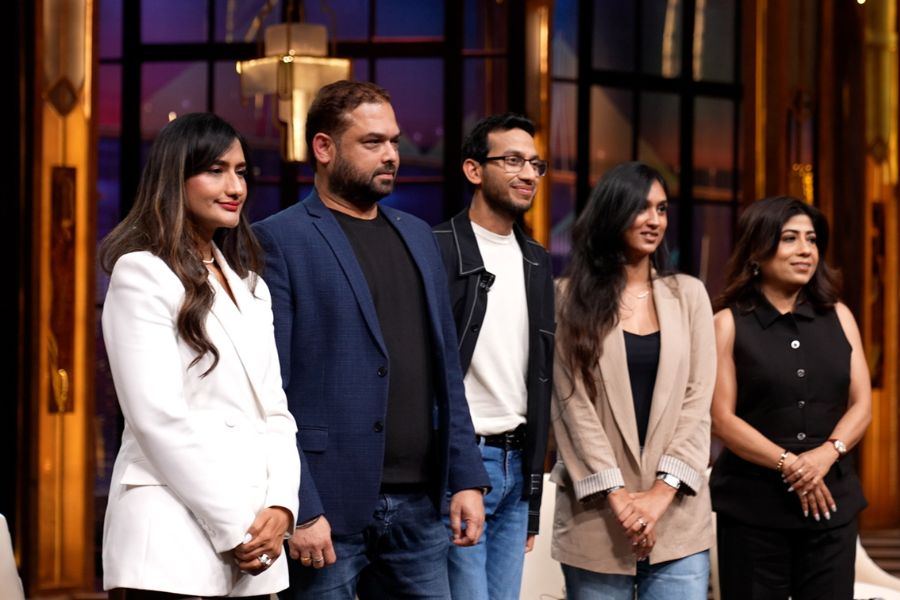
As Shark Tank India returns for its fifth season, it does so with a quiet but consequential reset to reach more viewers. After an OTT-only run in season four, the show is moving back to Sony’s television platform, expanding from roughly 30 episodes to around 50.
Ranjana Mangala, EVP and head of ad revenue at Sony LIV claims that the decision reflects a confidence built over the first three seasons, which aired on television and embedded the format into India’s cultural vocabulary. “Our first three seasons on Sony LIV TV did exponentially well and became a part of pop culture,” she says. While stating that it’s important to experiment, she was excited to see the show’s growing popularity over the years. “It was only natural to bring it back to television in the fifth year,” she explained.
This return is not a retreat from digital ambition but an acknowledgement that scale and cultural relevance still converge most powerfully on mass platforms. This is particularly when a reality show transcends format and becomes a reference point in everyday conversation.
The geography of growth
Season four reportedly delivered subscription coverage across 42 tier-two markets, underlining the show’s growing resonance beyond metros. This geographic spread raises questions about inventory pricing and sponsorship calibration as the show leans further into India’s heartlands.
Mangala resists rigid market segmentation. “There is a tier two in every tier one, and there is a tier one in every tier two,” she says, suggesting that cultural relevance cuts across postcodes. For Shark Tank India to reach its full potential, advertiser support must evolve alongside the audience, rather than chase narrow demographic definitions.
One persistent question around the show has been how advertiser ROI is measured across OTT and TV, especially as the show grows in episode volume. Mangala argues that the distinction between the two environments is increasingly overstated. “OTT and TV are not really very different. Advertisers will go wherever the viewers are,” Mangala says.
What complicates measurement, she notes, is that Shark Tank India operates in a rarefied context. “It gives you a massively unique environment to place your brand at the peak of pop culture. Can that just be evaluated in CPMs? Not really.”
Instead, Sony LIV spent time educating advertisers on the environment’s value. Unlike conventional digital formats, Shark Tank India is written with advertising breaks in mind, allowing brand messages to sit within the narrative rather than interrupt it. “Advertising on OTT is not necessarily a disruption,” Mangala explains. “It’s an aided awareness programme that really works for brands.”
Time spent, recall and contextual alignment matter as much as efficiency metrics. The show’s ability to deliver long-form engagement, across both TV and OTT screens, has allowed advertisers to think beyond reach and into narrative association.
Beyond logo placements
For Oppo India, the appeal of Shark Tank India lay in its breadth of participation rather than its headline ratings. Goldee Patnaik, the company’s head of communications, describes the association as a partnership rather than a sponsorship.
“There are people who come to pitch about business, others to select mentors, and some to market existing products,” he says. “They come from metros, emerging markets and smaller towns. This is the true Bharat.”
In a highly cluttered smartphone market, the smartphone company was not looking for surface-level visibility. The objective was emotional connection, particularly with younger consumers navigating ambition, mobility and self-improvement.
The show’s narrative diversity—founders at different stages, varied aspirations and uneven outcomes—allows brands to embed themselves within real-life decision-making rather than idealised success stories. Hence, for Canva, the decision to partner with the show was never about top-of-funnel awareness.
Shubhika Jain, India brand lead at Canva, explained, “What we were looking to achieve was to reach a very relevant community. A community that is an integral fit for Canva, where we can show design as more than just a tool; it’s a growth catalyst.”
That ambition becomes more complex in Bharat markets, where price sensitivity and tool fatigue are rising. Jain acknowledges the challenge. “We’ve invested heavily in localising the product experience for India,” she says. The expectation is not immediate conversion, but long-term adoption driven by relevance and accessibility.
Beyond metrics, Canva is looking for stories. “We’re hoping to see more real Canva stories come out of this integration,” Jain adds—use cases that reinforce credibility among aspiring founders rather than just inflating user numbers.
The founder’s reality check
For a format built around entrepreneurship, the show also navigates a more delicate cultural tension: the line between aspiration and hustle. While start-up culture often celebrates grind, many brands prefer to distance themselves from its harsher edges.
Mangala believes the show has managed that balance through deliberate storytelling. “Hustle is not always a bad word,” she says. “If it’s done in a nice, positive way. Somewhere between building and hustling lies that perfect balance, and that’s what we’ve represented for India.”
From the selection of sharks to the structure of pitches, the show positions ambition as disciplined effort rather than spectacle. That framing allows brands to align with progress and problem-solving without inheriting the anxiety often associated with start-up narratives.
From the entrepreneur’s side of the table, Shark Tank India is trying to extend its influence beyond airtime. Shaily Mehrotra, co-founder and CEO of Fixderma, and a first-time shark, argues that the show’s emphasis on diligence sends an important message.
“Any entrepreneur coming to pitch should understand these basics,” she says. “Even if your revenue is INR 2 crore or INR 20 crore, financial and legal diligence will happen.”
For Mehrotra, the scrutiny, which is often criticised as harsh, is a necessary corrective. The show has helped normalise conversations around compliance, trademarks and governance, particularly for small and medium businesses.
However, she also raises a structural question: what happens after the cameras stop rolling? “There should be a reality check,” she says, pointing to the absence of transparent post-show tracking. Whether funding was transferred, mentorship delivered or follow-ups honoured remains largely opaque.
Mangala acknowledges the concern but frames it within global precedent. “That’s always a global scenario,” she says. While some post-show narratives diverge from on-air agreements, she describes these as corner cases. “Look at the success stories that have come out of Shark Tank India. That number is far larger.”
Tor advertisers, the credibility question is not academic. Trust in the platform influences brand adjacency. Yet the show’s continued cultural traction suggests that audiences—and brands—are willing to accept some ambiguity in exchange for relevance and reach.
Advertising at cultural scale
What Shark Tank India demonstrates, as it enters its fifth season, is that advertising effectiveness increasingly depends on cultural positioning rather than media novelty. Whether on OTT or television, the show offers a context where brands can participate in national conversations about ambition, risk and growth.
For advertisers, the lesson is not about choosing platforms but about choosing moments. As the lines between content, commerce and culture continue to blur, formats that allow brands to integrate into lived narratives, rather than interrupt them, will command a premium.
In returning to television, Shark Tank India is not abandoning digital logic. It is acknowledging that in a fragmented media economy, pop culture remains one of the few scalable currencies. For brands willing to engage with its complexity, the tank still offers room to swim.