Campaign India Team
56 minutes ago

ChatGPT goes desi: Aspiration, accents and AI ambition

OpenAI’s first India push makes AI sound local, accessible and aspirational, but creative choices reveal gaps between cultural intent and execution.

OpenAI launched ChatGPT’s first nationwide omnichannel brand campaign in India, marking a pivotal moment in the company’s commitment to building AI for, and with, India. Rolling out across TV, OTT, print, digital and out-of-home platforms, the campaign will run over the coming weeks, and spotlights voice-first, regional-language experiences designed for Indian consumers.

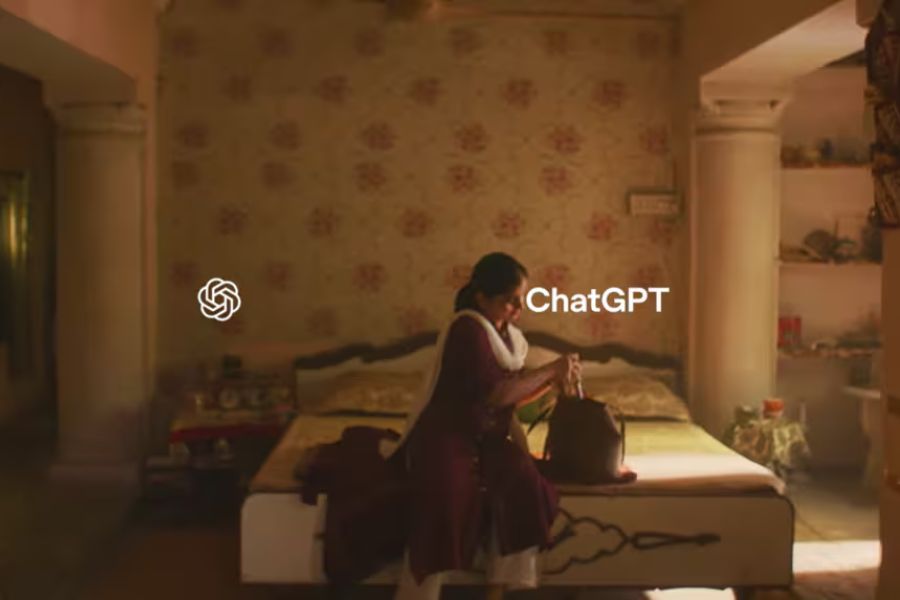
At the heart of the campaign are two powerful stories that showcase how Indians are using ChatGPT everyday to break through limitations, grow in confidence, and expand what’s possible for them. The films have been directed by Bharat Sikka, an Indian photographer and filmmaker, and will air in seven Indian languages, bringing ChatGPT’s voice and localisation capabilities to life.

“We believe that you don’t have to speak a different language than your primary one, to access AI tools. Our focus is on making ChatGPT feel natural, intuitive and culturally aware across Indian languages. This campaign is inspired by several real-life cases where ChatGPT has been a trusted tool, helping people learn, create, prepare, communicate, and grow—in the language they are most comfortable in”, said Sheeladitya Mohanty, head of marketing-India at OpenAI.

The two films will be released in Bengali, Hindi, Kannada, Malayalam, Marathi, Tamil, and Telugu. The first film, out now, highlights how a young woman engages with ChatGPT to prepare for her job interview. The campaign will air on television, along with online video, streaming and digital platforms, with stills in print media and OOH sites.

Campaign’s take: OpenAI’s first integrated India campaign for ChatGPT plays straight into the country’s favourite brief: aspiration with familiarity. The setting is tier-2 and beyond, the boomtowns where ambition is loud, English is functional, and comfort lives in the mother tongue.

The film’s centrepiece is a young woman prepping for a job interview in Hindi. It positions ChatGPT as a pocket-sized career coach that is always-on, endlessly patient, and conveniently non-judgemental.

Creatively, it’s a smart pivot away from ‘AI as alien genius’ to ‘AI as a day-to-day assistant’. Voice-first interactions, everyday environments, and the deliberate normalisation of Hindi-led queries makes learning feel less intimidating and more achievable. It’s the sort of simplicity that works because it doesn’t look like a demo; it looks life-like.

The soundtrack choice, Kishore Kumar’s Pal pal dil ke paas from the 1973 film Blackmail, does the emotional stage setting. It adds instant nostalgia, but also creates a strange contrast: retro romance underscoring a very modern tool.

Where the film stumbles is in audio authenticity. The voice interaction opens with heavily accented English and lands in oddly accented Hindi, which is a far cry from the rhythms of real Indian speech. For a campaign selling ‘natural’ AI, this mismatch is deafening.

Still, as a first step, it signals intent: less Silicon Valley, more small-town India. Since its 2022 launch, ChatGPT’s India story has been about breaking barriers to entry. This campaign formalises that ambition — even if the accents haven’t caught up with the aspiration yet.

Source:
Campaign India

Related Articles

Just Published

17 hours ago

Paramount launches hostile $104 billion cash bid to ...

Totalling $25 billion higher than Netflix’s bid, analysts say whichever company ultimately secures WBD will gain a decisive advantage in the streaming wars.

19 hours ago

Advertisers are watching Australia’s teen social ...

Under-16 digital behaviour in Australia is about to change, and ripple effects for brands will be everywhere.

20 hours ago

Mirror, EMIs and the postponed dream of retirement

Kotak Life’s latest ad reframes retirement as reinvention, using a mirror monologue to tackle India’s chronic tendency to postpone long-term planning.

20 hours ago

India’s E&M industry projected to grow 7.8%: PWC

The industry is expected to grow from $32.2 billion in 2024 to $47.2 billion by 2029, nearly twice the global average of 4.2%.