Dave Trott's blog: A crap idea
With the example of toilets and pits, the author explains how a problem can be turned into an opportunity


With the example of toilets and pits, the author explains how a problem can be turned into an opportunity

The author states that the advertising world, just like the referees, needs to learn the advantage rule, and start focussing on the consumers

Advertising is often confusing, and while many believe there must be an underlying sense, the layers of meaning can be hard to decipher, says Dave Trott

The author explains why a lazy ad full of people dancing and laughing their heads off won’t deliver emotion

With an example of tobacco companies using filters, the author asks who is brand purpose really for

The author states that the advertising industry needs to see their audiences' lives and what interests them, rather than what interests the industry

Dave Trott shares the evolution and packaging roots of the Coca-Cola bottle

ChatGPT is the latest example of marketing behaving Gadarene swine and won't be the last says the author

The author explains how one of the most important points in marketing is context

Many years ago, in really boring history classes, I learned the names of lots of wars and treaties and immediately forgot all of them. But over the years, there was one name that stuck in my mind: the War of Jenkins’ Ear

The author urges readers to forget about a decision after making it rather than worrying about it

The author states that the advertising industry needs a paradigm shift to see that it's not at the centre of the universe, but people are

The author reveals that the advertising industry has lost touch with reality and the job it is supposed to be doing

The author compares a 'bomb-detecting' device with advertising research

The author explains how a company's revenue went from $40m to $400m when they fired the marketing department

The author states that to get a campaign going viral one needs brains, not money

The story of the man who convinced the world different types of wine deserved different glasses.

The author states how consumers have a problem with lies and being patronised

New questions will bring new answers, says the author

The author explains why he always advocates to clients that the very best advertising will be a campaign that the competition will try to get banned.

That's the only way one can be creative says the author

The author explains how it’s never just about understanding the job, but it’s about understanding people

The author explains how Obama managed to sell more guns than Trump

The author explains what one can do to change the perspective and make something unimportant very important.

The author explains why we should encourage real creativity instead of just paying it lip service

The author brings out the importance of 'context' and explains how brands ignore that on digital

The author tells us why being everybody's second choice is not necessarily a bad thing

The author cites an example of 'Confirmation Bias' from psychiatric hospitals and links it to the traditional versus digital advertising debate
A view from Dave Trott

The author suggests the right way for humans and technology to interact

The author explains why Arturo Di Modica, the artist behind the 'bull' on Wall Street, hates the recently installed 'Fearless Girl' bronze statue

The author explains how Theodore Roosevelt's team got a photographer to pay for a picture, they would have to purchase for $3 million

The author explains why you can’t replace brains with technology with an example

Starting with the business problem forces us to come at the situation out of a question rather than an answer, explains the author

But you have to make sure your mnemonic can’t be changed into a better mnemonic by the competition, says the author

The author welcomes readers to the world of big data and programmatic and explains how it's making us more ignorant

The author explains how an agency with more data and technology does not guarantee a better result

The author brings out the importance of professionals listening to what ordinary people say

The author counters the notion that advertising is a mutually exclusive choice between the rational and emotional

With a heartwarming story, the author explains why the creativity business doesn’t have to be complicated

The author explains why the real estate tycoon running for US presidency might be the 'ultimate brand'

The author reflects on merit controversies and attendant word-of-mouth

In a two-way race, you have to go faster than the other guy or make him slower than you. You win either way, says the author

Ads too clever to be understood spell the death knell for advertising, says the author

The Clinton camp should learn from Brexit and start talking to people who can be converted, says the author

The author explains how before selling something, one needs to sell the need

We should stop surrounding ourselves with people who think like us, contends the author

Advertisers for 'Remain' forgot that the EU referendum wasn’t another brand, contends the author

The author explains how Project Rubicon, which has over 35,000 ex-soldiers as members, helps them as much as those they bring relief to

Media isn’t about number of impressions, says the author, but the power of the impression you make

The author narrates a courageous tale of going against marketing wisdom

The author underlines the need speak with consumers in a language they understand

Everybody wins when you set up the game right, says the author, with example of a pizza shop called Rosa's

Why the world believed one double Nobel winner over every other scientist

If you control the belief, you control the reality, contends the author

The author underlines the need to question seemingly scientific hypotheses

The author says simplify whatever you want to say, until you are embarrassed at how simple it is

A lesson from small town Crickhowell that has chosen to avoid paying tax the same legal way big companies are allowed to

"How about not being ashamed of advertising," asks the author

What ad-tech and targeting did to 98-year-old Olive Cooke

I was recently invited to a roundtable discussion with a dozen of the most senior people in the ad business

Recently, a debating team from Harvard University were beaten by a debating team from prison

"Life, Liberty, and the pursuit of Happiness" is one of the most famous phrases in the English language

Sometimes the most powerful thing we can do is say no, says the author

Can you spot the difference between these two?

The author breaks down Maslow's hierarchy of needs to differentiate between the role of creative vs. marketing

The author talks about ‘bad marketing’, using the example of Winston Churchill and the Great War

The author explains its importance, with example of a 'rock and roll opera' that became Who

With the example of 'protein powder', the author explains 'smart marketing'
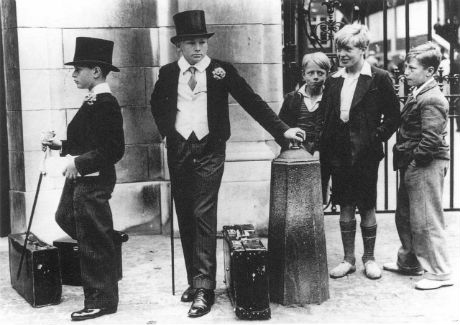
A picture is not what it means, but what it is interpreted as - it's all in the mind, argues the author

Advertising isn't marketing but the voice of marketing... and most advertising people don't know that, contends the author
Dave Trott looks at how the Russian ‘space team’, with hardly any resources, took market share from the brand leader

The author explains why work done by the Arrels Foundation solves more than one problem for the homeless

The problem with all prisons worldwide is overcrowding

How Amadeo Gianni conceived Bank of Italy, the Visa story, and lessons therein

Have you ever wondered why Bank Holidays are called that?
The author explains why men are on ‘broadcast’, while women are on ‘receive’
The author offers proof that hard-hitting product-based advertising is not incompatible with brand building
My favourite David Abbott story is about the Economist campaign.

Alex Ferguson understands football, but Victoria Beckham understands marketing a brand, says the author
The author says that to get someone’s attention, you have to interrupt them - entertainingly. Because good ads work, bad ads don’t - whether on TV, radio, posters, press, Facebook, YouTube or Twitter.
‘Stop counting teaspoons and begin to cook’ - and other lessons from an anti-recipe cookbook
Discipline isn’t the enemy of creativity – it makes creativity happen, says the author
Dave Trott is executive creative director at CST The Gate, UK

The story of the game changing one-way trailer rental business

Dave Trott, executive creative director, CST The Gate, explains the fundamental law of selling through a captivating historical anecdote