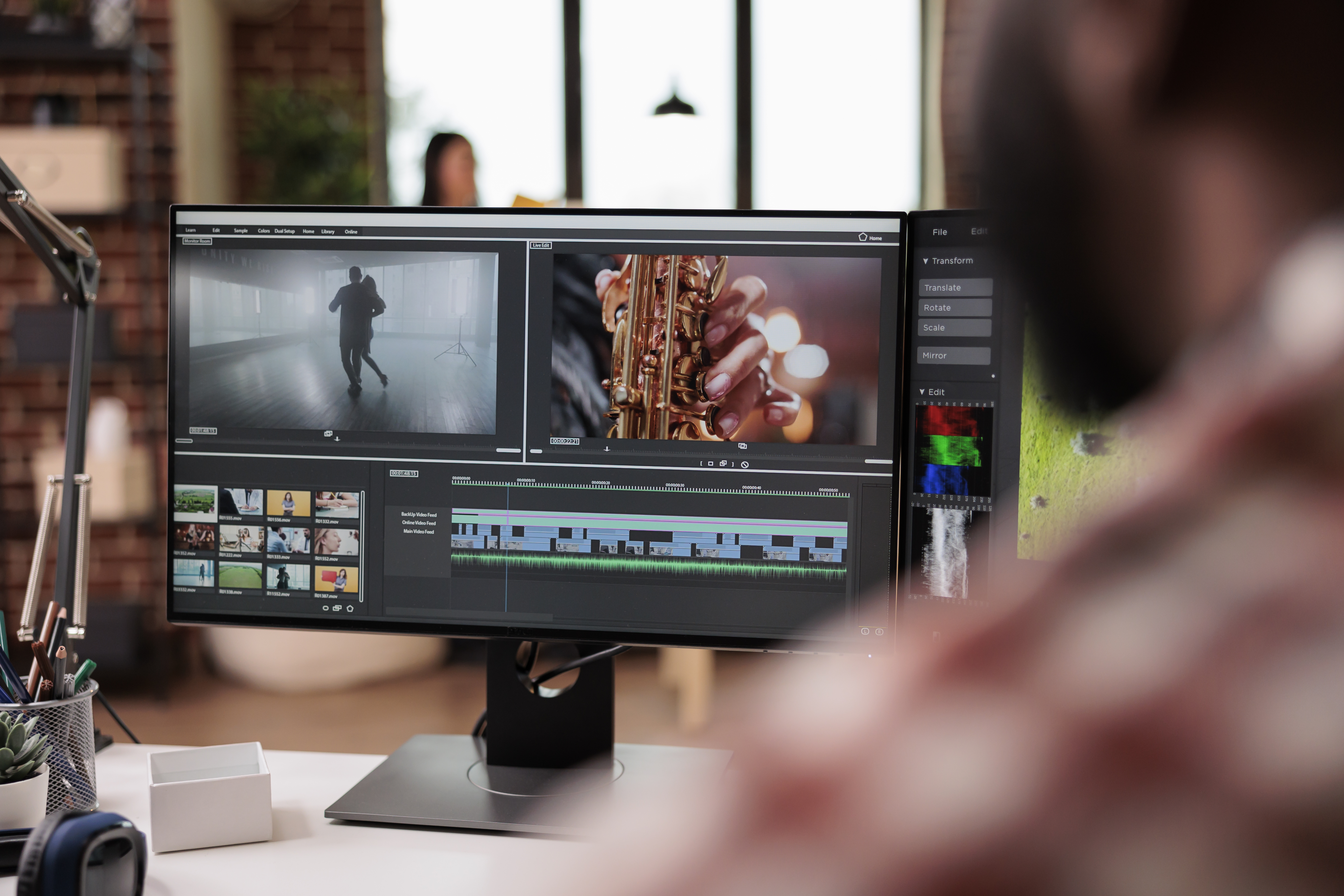
For decades, the world has recognised India for its impressive production capabilities, the scale, efficiency, speed and ingenuity with which films and series were made. But today, the most significant evolution happens after filming wraps.
Post-production, VFX, animation, colour science, immersive audio and next-generation media-tech workflows have quietly become India’s strongest creative export. Studios across the country are mastering Dolby Vision, Dolby Atmos, HDR, building 8K-ready pipelines, integrating real-time rendering engines and deploying AI across everything from quality control (QC) to asset optimisation.
What once served local and regional storytelling has expanded into a sophisticated ecosystem powering global content at scale.
Netflix’s decision to set up a major Global Capability Centre (GCC) in Hyderabad is an indication of just how far India has come.
Netflix’s move to lease roughly 40,000–41,000 sq ft for its GCC in HITECH City is not a routine expansion, it is a strategic declaration. This centre is not built solely to serve Indian-language content. It is designed as an integral global backend supporting worldwide workflows, including VFX support, post-production processes, editing, asset operations and complex technical functions.
When one of the world’s largest streaming platforms chooses India as a hub for global creative operations, it marks a shift in how the world views the country. India is no longer an outsourcing destination; it is becoming a trusted, scalable, technically advanced and creatively mature partner in the global content supply chain. An ecosystem that can deliver world-class quality, consistently and at scale.
The push toward global-grade workflows
A global centre of this magnitude automatically raises the bar for the entire industry. To meet international standards, more than artistic talent is required — modernised pipelines, high-capacity systems and seamless collaboration across continents are essential.
Indian studios are now upgrading to support high-dynamic-range colour, multi-format mastering, massive data workloads, and secure cloud-based review environments. Post-production today is a form of engineering: precision workflows that bring storytelling and technology together.
The modern post facility must be able to manage high-volume VFX shots, HDR finishing, AI-assisted QC, multi-language asset management, and real-time remote review. These workflows require meticulous calibration, fast data transfer, powerful rendering infrastructure, and a deep understanding of global delivery standards.

The industry's shift toward such sophistication marks a departure from earlier service models. Indian post-production is no longer playing catch-up; it has become a benchmark for workflow efficiency and creative integration of technology.
India’s talent advantage
India’s biggest asset has always been its people. The country produces thousands of VFX artists, animators, colourists, sound specialists, and post-production technicians every year. Alongside this creative talent is a lesser-known strength: engineering expertise.
India is one of the few places where creative specialists work alongside pipeline engineers, AI developers, colour scientists, and workflow designers under one roof. This blend of storytelling and technical thinking gives India a unique advantage as technology increasingly begins to shape content.
Additionally, exposure to global projects has sped up professional growth across the industry. Indian artists and engineers are now involved in international franchises, original content for OTT platforms, global remasters, and multi-market streaming material. As more global platforms establish a presence here, the talent ecosystem will become more specialised, technically skilled, and globally connected.
But perhaps the most important shift underway is the movement away from cost-driven outsourcing. India is no longer competing on price; it is competing on value.
The global content industry prioritises fast turnarounds without sacrificing quality, multi-format precision, integrated end-to-end workflows, and secure and scalable data. Indian studios increasingly excel in these areas. What was once a strength rooted in efficiency has transformed into a capability anchored in innovation.
India’s ‘Glocal’ identity
One of the most significant advantages of India’s creative ecosystem today is its ability to serve both local and global markets with equal fluency. The lines between these audiences are blurring. A single Indian studio today might finish a Marathi OTT original, restore a classic for an international re-release, handle VFX for a global franchise and perform multi-language QC for a major worldwide launch, all within the same month.
This dual competency, rooted in cultural understanding and global technical proficiency, is shaping India’s emerging ‘glocal’ identity. It signals flexibility, scale and cross-cultural storytelling insight, all of which are indispensable for global content pipelines.
A tipping point for India’s creative-tech future
Hyderabad’s rise as a media-tech hub is only the beginning. Netflix’s GCC will accelerate investment in high-speed connectivity, next-gen grading theatres, cloud-enable review systems, AI-based media processing labs, and secure digital storage infrastructure.
These clusters will not only empower large facilities but will also uplift mid-sized studios, training academies, start-ups and technology partners, all of which help to build a stronger ecosystem.
India’s post-production and VFX ecosystem stands at a crucial moment. The talent is strong, the infrastructure is evolving rapidly, and global trust is deepening. As major global platforms expand operations here, the next decade will be defined by how quickly the industry scales advanced workflows such as HDR, spatial audio, remote collaboration, AI-assisted mastering and 8K-ready pipelines.
India is not preparing to join the global content revolution. It is preparing to lead it.

-Abhishek Prasad, director and CTO, Prasad