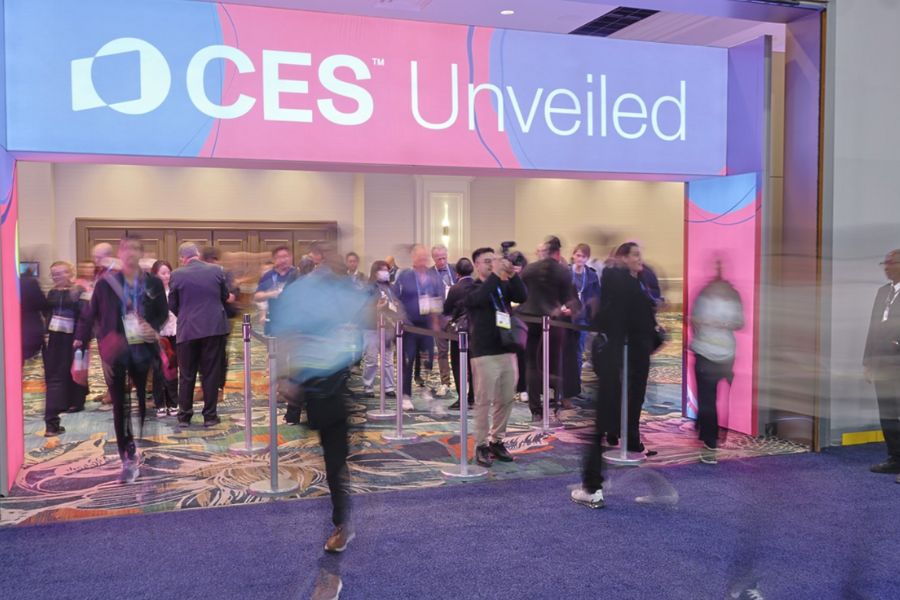
There are very few global forums left that still feel unavoidable for advertising. The Consumer Electronics Show (CES) is one of them. Not because of product launches, shiny gadgets or keynote theatrics, but because it has quietly evolved into a barometer of how businesses, brands, platforms and ecosystems are likely to operate over the next five to ten years.
For agencies, media companies and marketers, CES is no longer about spotting the next screen or device. It is about understanding how intelligence, creativity, data, culture and commerce are converging into new operating models.
Walking the floors of CES 2026, what struck me most was not the scale of innovation but the seriousness of intent. The conversations have changed. The questions have changed. The expectations have changed. This is no longer a playground for experimentation. It is a proving ground for what is ready to be deployed, scaled and integrated into real businesses.
For advertising professionals, CES now forces a simple but uncomfortable question: what is genuinely actionable, and what is still theatre?
For someone like me, a creative technology leader who thrives on collaboration, prototyping and making the unthinkable possible, CES feels less like a conference and more like a creative pilgrimage. Las Vegas itself sets the tone. A city that never pretends to be subtle—high energy, high ambition, unapologetically bold.
There is something fitting about discussing the future of intelligence, creativity and humanity in a place built entirely on imagination, spectacle and belief. CES mirrors that ethos. It rewards those who show up curious, open-minded and willing to connect dots across disciplines.
From hype cycles to operating systems
Compared with CES 2025, the shift this year was unmistakable. Last year still carried a heavy layer of hype. AGI (artificial general intelligence) was a promise. Humanoid robotics felt aspirational. Conversational AI was impressive but often scripted and demo-driven.
This year, the tone has matured. The hype has cooled, but the investment has deepened. What was experimental is now operational.

What was being tested in labs is now being discussed in terms of deployment, governance, ROI and scale. Conversations with exhibiting brands reflected this shift. There was less noise, fewer buzzwords and far more substance. People were no longer asking, “Can this work?” They were asking, “How do we integrate this responsibly, affordably and at scale?”
For advertising, that distinction matters. It signals a move from novelty-driven innovation to systems-driven transformation.
Humanoid robotics and advanced conversational AI came uncomfortably close to what many of us had only read about in books. Some interactions felt real. Some responses genuinely surprised me. Some made me laugh. Others stayed with me long after the conversation ended. As an innovation leader, seeing ideas once sketched on whiteboards materialise in front of your eyes is both humbling and energising.
Yet the real game changers at CES 2026 were not gadgets. They were themes.
Where creativity met computation
One of the most powerful moments for me this year was experiencing The Wizard of Oz at the Sphere. Watching a story unfold inside that architectural marvel is overwhelming in the best way. But what stayed with me was what followed.
Sitting at the WPP Media Lounge and hearing Google experts unpack what went into creating that experience. Listening to how Google’s AI systems were woven creatively into the storytelling, and how engineering, art and data came together to produce something emotionally immersive, reaffirmed a belief I have carried throughout my career. When something feels impossible at first glance, it is usually a sign that it needs collaboration, not compromise.
I have always been drawn to ideas where the first reaction in the room is, “This can’t be done.” And then you bring together creatives, technologists, agencies, startups, platform partners and clients, and slowly make the impossible real. In many ways, CES 2026 felt like a global validation of that mindset.
AI has now moved decisively into the operational core of marketing and advertising. Planning systems that adapt in real time. Creative versioning engines that understand context, culture and audience signals. Measurement frameworks that predict outcomes instead of reporting history. What stood out was not incremental upgrades, but the quiet emergence of predictive, decision-making systems that can genuinely augment human creativity rather than replace it.
The smartest conversations were no longer about whether AI belongs in creativity, but where human judgment must remain non-negotiable.
Why India matters more than ever
The most exciting lens through which I viewed CES this year was creative technology, with India firmly at the centre of the narrative. India is no longer just a scale market. It is a thinking market. A growth market that thrives on agility, affordability and constraint-led innovation.
This is the kind of innovation that builds for diversity, low bandwidth, multiple languages and real-world complexity. It travels globally precisely because it is designed to work everywhere. CES reinforced how relevant the ‘build for India, deploy for the world’ mindset has become.
Whether it is AI systems designed for accessibility, voice-first interfaces or immersive experiences that function on basic devices, India has an advantage that is often underestimated. We know how to innovate under pressure. We know how to pilot fast, learn faster and scale responsibly.
This is where the work coming out of WPP’s Global Delivery Centres in India becomes especially relevant. The ability to complement global strategy with Indian ingenuity, execution excellence and cost efficiency is no longer a support story. It is increasingly a leadership story. CES made that clear.
There is also a hunger in India—to test and learn, to pilot ideas without waiting for perfect case studies, and to push brand marketing beyond performance dashboards back into cultural relevance. CES 2026 showed me that the next wave of brand growth will come from those willing to invest in creative tech not as a layer, but as a capability.
What should brands actually do now?
So what does all this mean in practical, client-ready terms?
First, invest in AI systems that augment creative teams rather than replace them. Planning, optimisation and versioning engines that free humans to focus on storytelling, empathy and big ideas will deliver disproportionate value.
Second, test immersive and conversational experiences with restraint and purpose. Not every brand needs a humanoid or a virtual world. But brands that use these tools to solve real problems, improve accessibility or deepen utility will earn trust and attention.
Third, double down on accessibility-first innovation. Voice, vernacular, low-data experiences and inclusive design are not emerging trends. They are global imperatives. What works in Bharat will increasingly work everywhere.
Fourth, be cautious with fully autonomous decision-making in brand contexts. Governance, ethics and cultural nuance still require human oversight. CES made it clear that the most effective systems are hybrid systems.
Finally, remember that technology does not dilute creativity. It sharpens it, when used with intent.
Some CES 2026 trends will scale globally faster than others. Predictive AI, creative automation and conversational interfaces will travel quickly. Humanoid robotics will find specific, high-value use cases before becoming mainstream. What may not translate immediately to India are capital-intensive, hardware-heavy solutions that ignore local realities. But the underlying intelligence behind them almost certainly will.
As I reflect on CES 2026, I come back to a simple feeling: gratitude. Gratitude for being alive in a time where imagination is being encoded into reality. Gratitude for collaborators across the world who believe in making the unthinkable possible. And gratitude for the opportunity to bring these learnings back to clients, teams and young innovators in India.
CES 2026 did not just show me the future of advertising. It reminded me why I chose this path in the first place to humanise technology, build with empathy, collaborate relentlessly and ensure that as the world races ahead, no one is left behind.
That, for me, is the real signal from CES.

-Niraj Ruparel, creative tech lead, WPP India and WPP Media