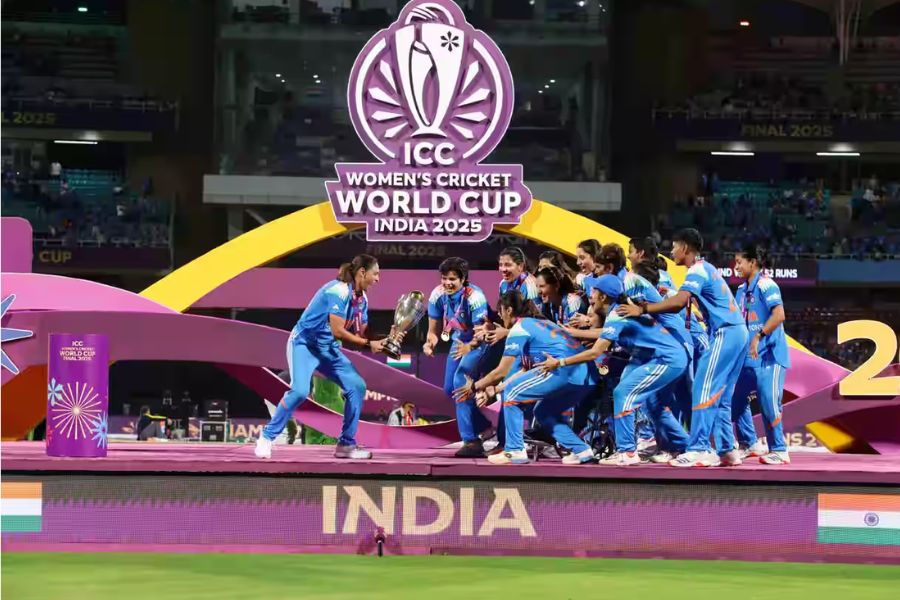
Once the hurrahs for Indian women's cricket team fade who made India proud who claimed their first global title this Sunday, the real work begins. And that word — ‘work’ — should rightly be replaced by ‘business’. Because sport, for all its emotional highs and national pride, is an industry. And like any other industry, its growth depends on investment, visibility, and an ecosystem that nurtures both current performers and future prospects.
For decades, Indian sportswomen across disciplines, i.e. cricket, badminton, kabaddi, hockey, and more recently, sports like padel and pickleball have faced an uphill battle. Not just in performance, but in the pursuit of sponsorships and endorsements that would allow them to train without financial anxiety.
While icons like Mary Kom, Sania Mirza, and PV Sindhu have rightly become brand favourites, their success stories often overshadow the hundreds of talented women who never get that break because their journey stalls midway due to lack of support, visibility, or both.
The visibility-value paradox
It’s easy to build campaigns around a champion and their face recognition ensures reach, their victories add credibility, and their stories evoke emotion. But this focus on visibility has created a paradox.
Visibility drives investment. But investment is what actually creates visibility.
As a result, young or lesser-known women athletes often find themselves in a vicious cycle. Without visibility, they don’t get sponsors, and without sponsors, they can’t afford to stay visible through better training or competition exposure.
This isn’t a gender-exclusive problem, but it is more pronounced for women. Many women athletes in India still juggle part-time jobs or academic commitments to fund their sporting dreams. The emotional appeal of their struggle makes for great documentary footage, but rarely translates into sustained brand partnerships.
Cricket’s dominance and the missed opportunity
Cricket, of course, occupies a different orbit. The Women’s Premier League (WPL) has been a game-changer, both in perception and economics. For the first time, we are seeing structured investments, media deals, and brand interest in women’s cricket that mirror the men’s format.
Because while women’s cricket is finally getting its due, another sport deeply rooted in India’s culture—kabaddi—is still waiting for its breakout moment. The men’s Kabaddi Leagues proved that the game could command prime-time viewership, attract serious sponsorship, and build stars from the grassroots. But women’s kabaddi, despite its growing talent pool and competitive leagues at the state and national levels, continues to operate on the margins of visibility.
This contrast highlights a missed opportunity. Cricket’s rise shows what happens when structured investment meets consistent storytelling. Kabaddi, on the other hand, represents the next big canvas, one that connects with Bharat’s heartland, speaks a universal language of grit, and carries enormous untapped marketing potential. Similarly, women’s football and athletics continue to depend heavily on government or federation grants, with limited private-sector engagement.
If brands restrict their enthusiasm to women’s cricket alone, the ecosystem will remain lopsided. Because the future of women’s sports isn’t just about shining stadium lights but it’s about ensuring every arena, big or small, gets the chance to shine.
A marketing imperative, not a charity case
Historically, many brands have looked at women’s sports through a CSR lens, something done out of goodwill, not business logic. Because women’s sports, particularly at the grassroots or semi-professional level, represent one of the most under-leveraged storytelling platforms available to brands today.
The modern consumer especially Gen Z and younger millennials, values authenticity and purpose. Supporting an emerging athlete aligns with these expectations far better than another celebrity endorsement. The brand equity built from backing someone’s journey can often outlast the buzz of a championship win.
We have seen glimpses of this shift globally. Nike’s ‘Dream Crazier’ campaign, P&G’s ‘Thank You, Mom’, and Visa’s long-term sponsorship of women’s football all underline a truth: when brands invest early and consistently, they don’t just shape perception but they shape culture. India’s growing interest in women’s sports is ripe for similar disruption.
From an advertising standpoint, the women’s sports movement represents a fresh narrative canvas. It’s a space largely free from overexposure or commercial fatigue.
Creative agencies and brand marketers can find powerful, relatable stories in the lives of athletes still on their way up stories that mirror the values of ambition, resilience, and hope that most modern brands want to communicate.
However, the approach needs to shift from event-based sponsorships to long-term brand associations. Instead of one-off jersey logos or congratulatory posts, brands should think in terms of year-round athlete support programs, digital content collaborations, and mentorship ecosystems. The return on such investments isn’t always immediate in sales metrics but it’s significant in brand equity, credibility, and consumer trust.
Athletes as storytellers
The narratives we choose to amplify often determine where the money flows. For years, the spotlight even within women’s sports has leaned heavily toward cricket, shaping perceptions of where commercial value truly lies. This is where digital-first platforms and content creators can play a transformative role by expanding the canvas of storytelling.
The evolution of short-form content, athlete-led storytelling, and community-driven digital ecosystems means that brands no longer have to depend on traditional broadcasters for reach.
A young athlete’s journey can unfold directly on Instagram, YouTube, or OTT platforms offering an authentic, unfiltered glimpse into the making of a sportsperson. For brands, this shift opens a powerful new space—the ability to build narratives around perseverance, passion, and progress rather than just podium finishes.
It’s a form of storytelling that resonates with younger audiences. It also allows women athletes from diverse disciplines kabaddi included to connect directly with fans and sponsors alike.
The responsibility, therefore, isn’t just on brands. It’s shared across agencies, media partners, federations, and fans. Because when an ecosystem grows, every stakeholder benefits from the athlete on the mat to the marketer in the boardroom.
The next frontier of Indian sports marketing won’t be defined by who wins the next medal. It will be defined by which brands choose to invest before the medals are won when the lights are dim, the crowd is small, and the potential is still being shaped.
That’s where real impact lies. And that’s where the business of sport truly begins.

- Simran Malik, chief operating officer, SJ Uplift Kabaddi